Audio in Corporate Video: The Mistake No Brand Wants to Make Twice
The human brain rejects bad audio before it rejects bad image. A practical guide to common problems, microphone types and acoustic treatment.

Edgar Ulate
General Director · Ciudad Click
There's an experiment worth trying: play the same video twice. In the first version, the image is sharp, well-lit, with a clean composition. But the audio has reverb and background noise. In the second version, the image is slightly worse — a bit more compressed, less perfect light. But the audio is clean and clear.
In almost all cases, the second video is perceived as more professional. The brain has an intolerance for bad audio that it doesn't have for bad image. We tolerate amateur images more easily than we tolerate voices that echo in a poorly treated space.
"You can have the best camera in the world. If the mic is bad, the video is bad. Without exception."
The 3 most common audio problems in corporate videos
- Excessive echo and reverb: Happens when recording in rooms with bare floors, glass walls and no acoustic treatment. The sound bounces and the voice "muddies." It can be softened in post but never eliminated.
- Constant background noise: Air conditioning, street traffic, ventilation systems. When recording without noise isolation, these sounds compete with the voice throughout the entire video.
- Volume variation between cuts: Switching between locations or recording sessions without maintaining consistent audio levels. The viewer has to constantly adjust the volume — and most won't do it.
The 3 microphone types for corporate video
Lavalier / Lapel Most used
Clips at the first shirt button, approximately 20-30 cm from the mouth. Ideal for interviews, testimonials, corporate spokespersons. Invisible in frame. Main risk: clothing rubbing if not placed correctly.
Boom / Pole mic
Operated by a sound technician, positioned 30-40 cm above frame. Ideal when the subject moves or when a visible mic can't be worn. Picks up less ambient sound than a lavalier if there's rubbing. Requires an extra person on set.
Studio condenser
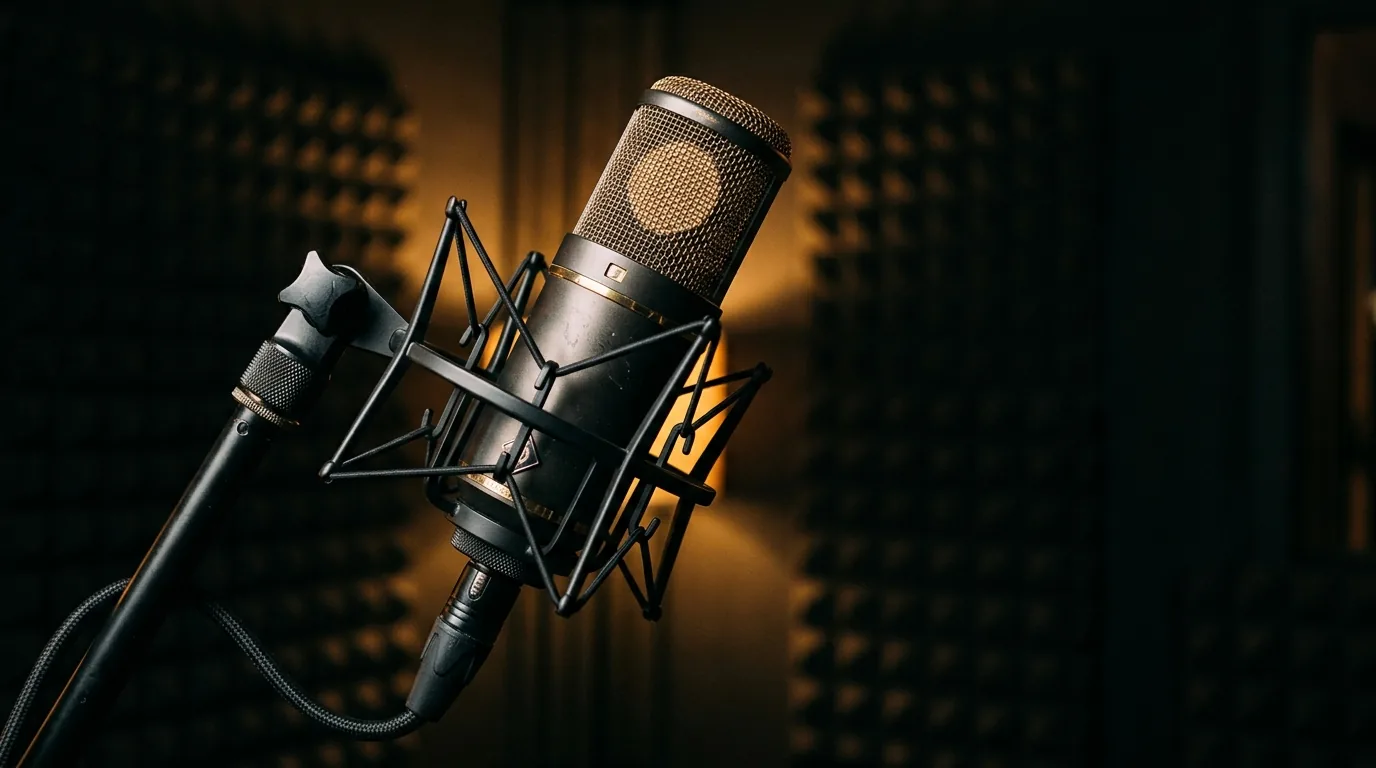
Fixed recording in an acoustically treated space. Used for voice-over, podcast, narration and dubbing. Requires a dedicated environment — it picks up everything, including the AC. Not portable.
Acoustic treatment matters more than the microphone
One of the biggest myths in corporate audio is that an expensive microphone will save a bad recording. It won't. A $2,000 microphone in an untreated room will sound worse than a $200 microphone in an acoustically prepared booth.
Acoustic treatment doesn't have to be permanent. Fabric panels, moving blankets, a walk-in closet full of clothes — these are solutions that reduce reverb significantly without major infrastructure. At Ciudad Click we carry portable treatment equipment to every recording outside our studio.
The 30cm rule
There's one practical rule that solves most audio problems in interviews and testimonials: the microphone must be between 20 and 30 centimeters from the mouth. Further away means more room, more reverb, more ambient noise. With a lavalier at the first shirt button, this distance is naturally achieved. With a boom, the operator positions it just outside frame.
The mistake of leaving audio "for editing"
Editing can improve audio. It can reduce noise, equalize frequencies, even up the levels. But it can't create information that wasn't captured. If the voice has echo embedded, editing will reduce it but won't eliminate the sensation of a bad space. If there's wind noise throughout, the only option is to cut that audio entirely.
Audio care happens on set, not in post. Editing is a repair tool — not a substitute for a good recording.
Key takeaways
- The brain rejects bad audio before bad image — it's a hard-wired perceptual preference.
- The 3 most common problems: echo, constant noise and volume variation between cuts.
- 3 microphone types: lavalier (interviews), boom (movement), studio condenser (voice-over).
- Acoustic treatment beats microphone price every time.
- Audio quality is decided on set — not in post-production.
Share this article
Need professional audio?
Our recording studio is ready.
Voice-over, podcast, corporate narration, dubbing, jingles. Professional sound from day one.
💬 Check availability on WhatsApp